Tuesday, 4 November 2014

Right or Left Brain?

Children of all ages have different ways on acquire learning. This is from what we observe our children do differently at Letzhop. One third of our students in the class may be excited about coloring pictures all day long while the other 2/3 of them prefer counting numbers and learning alphabets. It was quite challenging for us, teachers to understand them at first – having very few experiences handling young learners, but all we kept having in mind is that, “this must have something to do with how their brain works!” and from what we have been reading, a young child’s brain will let its dominant side to take over, without blending it in order to reach the brain’s full potential (Lipoff, 2011). 

In her article also, Lipoff highlighted that the brain consists of two main sides which known as the right and the left where the right side of the brain controls the left side of the body and otherwise (2011). Right side of the brain is responsible for creative, social, visualize skills and intuition while the left side deals with language, math and rational thought. The integration of the right and left parts of the brain encourage the working of the whole brain which enable the brain to reach its full potential. Thus, it is crucial for the children to learn through various types of activities that suit them that may help to integrate the right and left side of the brain. 

So, here at Letzhop, we let our children go through an interesting session every morning before class which we call the Hello! session that incorporates the Brain Gym exercises to initiate a fun learning mood (Letzhop Ready-to-Learn).

 Our P level students are doing the Log Roll


These are our Three-2-Six students doing the Log Roll early in the morning!


The exercise movements that we adapt from Brain Gym help the students to activate the brain cells and also to prepare their body for the upcoming activities of the day. We adapt the Brain Gym movements and activities from the original 26 Brain Gym movements and these activities replicated the movements that are naturally done during the first years of life when one learns to coordinate the eyes, ears, hands and whole body. Some example of movements that the students do at the centre is crawling, Commando-crawling, rolling and Bear-walking. 

We also incorporate PACE – Positive, Active, Clear and Energetic before the children activate their brain buttons. Well, brief information of how the abbreviation works; 

  1. Energetic – before we start off the activities, the children are encouraged to sip or drink some water. Not any water, it has to be a glass of plain, H20. 
  2. Clear – they need to clear up their minds, while breathing slowly, massaging their collar bones or what the teachers and Letzhop children call, the Brain Buttons.
  3. Active – our children will be guided by the teacher to do some cross-crawl movements – they could either touch their elbows and knees (crisscross movement) or as simple as by touching or patting their hands to their knees (left-to-right or right-to-left), slowly, at a medium pace.
  4. Positive – this is when our children start to relax their minds from the active movements done in #3. They will do interesting movements that we call “Hook-ups”. They will cross their ankles, extend their arms in front and cross one wrist over the other and clasp their hands up towards the chest. While doing the “Hook-ups”, the students are to inhale, touch he tip of their tongue to the root of their mouth at the hard palate and relax, before exhaling. 
The movements that we do with our children bring about dramatic improvements in areas such as concentration and focus, memories, academics, physical coordination, self-responsibilities, organization skills and attitude whenever we start the lesson in class. 


At Letzhop Shah Alam, we really believe in encouraging our students and even parents to do the movements so that they could see the wonders of using both the right and left sides of the brain. 


Authored by,
Teacher Siti Hajar 
LETZHOP Shah Alam 


Reference:
Lipoff, S. (2011, April 26). Funderstanding. Retrieved November 3, 2014, from http://www.funderstanding.com/theory/child-development/right-brain-vs-left-brain-children-and-creativity/

Tuesday, 28 October 2014

Our Little Letzhop VIPs

Hello. It is my turn again to come out with an article for your reading. I hope this article will be beneficial to all readers. This time I would like to share about my experience with Letzhop children. 

I would like to let you know how I get my interest in teaching. I really admire teaching since I am in primary school. I always believe all the teachers are brilliant because they are able to produce successful doctors, engineers, pilots, officers, business persons, and eventually a useful human being! For that, I have the biggest respect of their career and wish to become a passionate teacher myself. 

Here at Letzhop, I am officially a teacher for these wonderful kids. We always hear that teaching younger kids are tough. However, I take that as a challenge! Although teaching and nurturing them is a huge responsibility, I still find it interesting and fun. How can we resist from their laughter and cute smile? The difficulty I encounter whenever I am teaching them seems to disappear when I get to hear them giggle and having lots of fun in class. 

My passion grows every day as I see their innocent faces at school. There will be times when they are just difficult to deal with (our little VIPs), they argue with one another and cry when they don't get what they want - but that is solved quickly with a little bit of love and attention from a teacher. 

When dealing with our little VIPs I always make sure to remember that they are just innocent and they are not matured enough to think or do things like an adult. Hence our job as a teacher to assist and guide them as well as to nurture them with patience about how to do things. As a teacher, I make sure that the children are familiar with a routine (when going to the toilet, washing hands before and after eating, and even on how to greet their friends at school). 

Apart from that, you will see the children running around, picking on their friends or even taking other children's pencils/toys. This is the part where my role as a teacher comes in - to mould on good, positive behaviors in them. Manners, the dos and don’ts, and a whole lot more other things that I need to consider when I am called a teacher. 

Now, why am I doing all these and not just teach everything there is in the book again? 

That is definitely because to me, children are like gold, you won't get it as clean as the ones you see on the shelves. You need to wash, clean and polish it - so that it could shine.


Show and tell the children the way to do things, they will surely do wonders. 


Authored by,
Teacher Zeeda,
LETZHOP Bukit Jalil

Tuesday, 21 October 2014

An Eye Opening Experience at Sekolah Bimbingan Jalinan Kasih

We had a wonderful opportunity on 17 July 2014 to teach English to destitute street children at Sekolah Bimbingan Jalinan Kasih near Chow Kit in Kuala Lumpur. The Corporate Social Responsibility (CSR) event, called the “Program Prihatin Ilmu”, was held in collaboration with Zurriyat Ventures Sdn Bhd and Malaysia Islamic Children’s Fair (MICF).


It was an eye-opening experience for us as we have not had any experience teaching these children before. What came as a wonderful surprise to us was that they could understand some English words, and they were quick learners too! We taught about twenty primary school children, the various body parts of a human and proceeded to teach them on how to make a muppet out of paper bags and cut outs.


What I learnt personally from these bright children is that, all children, regardless of their background, family history and status, need love, a nurturing hand, support, attention, acceptance, validation and acknowledgement to thrive in this world. Everybody deserves second chances – same goes to these children.

Before we left, one of the little girls from the class came up to me and and said goodbye. She hugged my legs and innocently asked me, "Will you come back and teach us? I really liked the English class."

I said, "I really hope so too, kid", hugged her tightly.


Authored by,
Ms. Sarini Bujang
Principal and Teacher
LETZHOP Damansara

Tuesday, 14 October 2014

Simply Learning by Playing

Hi, my name is Farhanim and I am known as Ms Aniem here at Letzhop. I have been teaching Letzhop children for almost a year now and teaching the K1 children (3 to 4 years old) has been a fun working experience for me by far. Teaching in a K1 class is especially fun when I can play together with my students – to be one of them.

Learning and playing are two ways that I personally that can’t be separated. I prefer my K1 to move about in class instead of asking them to sit still and just listen to me or to look at the white board while I'm standing in front of the classroom. As for some teachers, that may be fine but not for me, not for my students – learning should be fun, in which they should move about, explore and imagine things.

I believe in learning by playing where the children can use their imaginations and creativity – touch and feel the object used as the topic of learning, sense with their fingers the rough or smooth surface of a triangle shape to recognize what is a ‘triangle’ and to even cut their own play dough so that they’ll learn the process of cutting.

Learning by playing deems the teacher’s creativity to prepare interesting activities so that the children can explore the topic learned in class and here, I would like to list and maybe suggest to all teachers out there, the activities that I have done so far with my K1 children.

Cutting Play Dough 

An activity that will help the children to practice on holding on to a pair of scissors correctly and cut better – a simple activity in which I will ask the students to cut their play dough (or associate it with a food item) so that I can eat it. They will be so eager to “feed” when I told them to do so.


It may be a simple activity but the role playing and imaginative play that they are associated with imposes a lot of learning possibilities. You might be surprised at what these children may learn from the activity – at a time, a child showed team work when he saw one of his friends were having a difficulty holding on to a pair of scissors – he showed to his friend and said, “this is how you hold the scissors” and you’ll be glad to have that simple cutting activity.

Build your own House Cake?


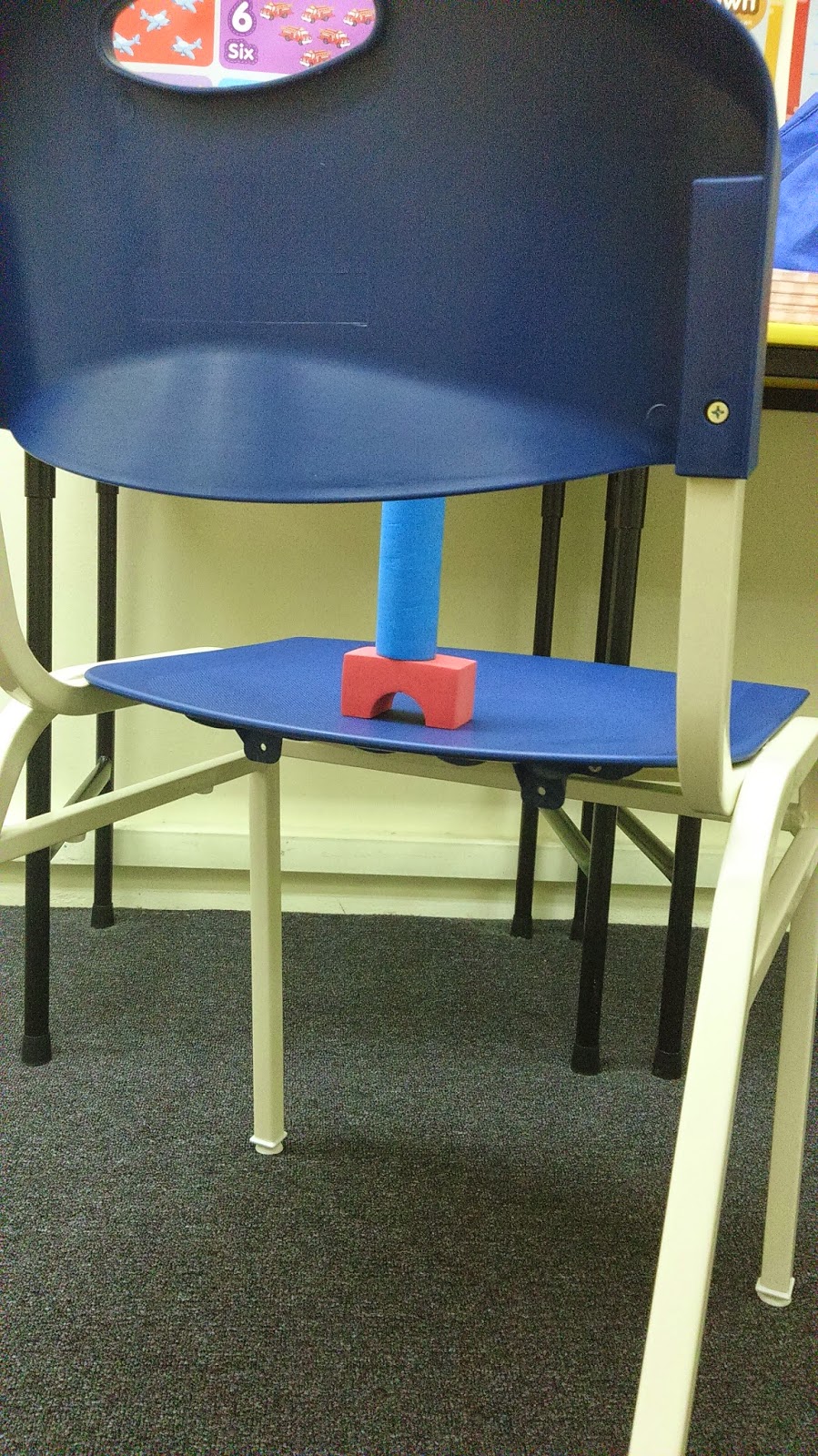
Initially, the activity was supposed to be on building their own big house with the play blocks but as they were building their “houses”, it ended up becoming a cake! They brought up the “cake” to me and asked me to blow the candle. I was so impressed with their imagination as later after that, they started to imagine on how to bake the cake in the “chair oven”.


The play they imagined showed how they have had been exposed to knowledge on cake and baking – they could replicate the oven found in the kitchen with a chair! That indicates how their brains and experience can relate objects using their critical and creative thinking skill that eventually leads to what I have always believed in – they learn by playing.

Clean-up Session 

A clean-up session after an activity may be seen as not important but this is when they show their team work – I get to see them cleaning up their toys, moving the toys containers and pass to everyone in the class and then I’ll see everyone moving and walking around the class to put the toys inside the box, until the class is clean. There will be times that they will fight with one another over the “moving boxes” out of making sure that the class is super clean, but what is important to me, they work together.

When the clean-up session is fun, I'm sure they will not have any problem to do it again and again. The activity may take time but as long as they are doing it together, that means that they are doing it okay.

There are so many other things in the world that we could do with them to teach or to impose well, positive values. I would suggest more in my next entry so that you could do with your children at home or even at your own school.

Until next time!


Authored by,
Teacher Aniem
LETZHOP Bandar Baru Bangi

Tuesday, 7 October 2014

Letzhop Sports Day 2014

Apart from a formal learning, physical activities are equally important in children’s development and process of growth. Sports, in specific, contribute not only to the physical well-being, but also for the psychological and social development of children.

In order to promote a healthy lifestyle among our students, Letzhop conducted a Sports Day event on 17 May 2014 at Pusat Komuniti Sri Petaling. The event, joined by our Bandar Baru Bangi, Selayang and Shah Alam centres, was quite a successful event.

 
At the beginning of the event, there was a School Marching competition between all participated centres. Letzhop Shah Alam won the best school marching contingent award, followed by Letzhop Bandar Baru Bangi and Letzhop Selayang, at the second and third place, respectively. All centres were very much participative in giving their best performance.


Letzhop Sports Day is unique because we added a carnival atmosphere to the event. All students need to complete five (5) challenges in order to collect prizes at the final checkpoint counter. The games and activities are carefully selected from fairground favourites. Each of these fairground games comes complete with a checkpoint card that can be used to collect prizes. So, it is like attending a fun fair!


Congratulations to the students for the enthusiasm and sportsmanship. Sincere thanks for parents for the continued support, and deepest gratitude to all teachers and the whole team members for the dedication and commitment!


Authored by,
Ms. Aishah
LETZHOP HQ

Tuesday, 30 September 2014

Communicating with Our Internet-Gen Kids

One of our children surprised us (my husband and I) with his recent achievement in the mid-term school exam. We felt it was timely to reward him with what he really wanted. Like many kids of this era, he likes computer games. When asked what he really wanted to get with his cash reward, his reply was a premium version of the same game from the internet. He told me the price of the game in US currency and the equivalent of it in Ringgit. He convinced me that there would still be some savings after purchasing the game. The day before we purchased the game, I wanted him to explain to me why he liked the game so much. He did so patiently and happily despite my constant interruption with questions and the need to correct his statements (ahem… playing a dual role of mom and teacher). I could see that he felt frustrated but he did not give up. So I said “Son, you have to explain to me about your game like you are talking to a layman”. He lamented, “Mom, I feel I am talking to a caveman!” When it comes to technology-related matter, my children always think they know more and agree unanimously that I am far behind!

These days, children use a lot of computer terminology in their day-to-day life. I recall one evening I had to dress up for a relative’s wedding dinner. When I walked down the stairs in a long dinner dress with my hair neatly blown and tied, my children looked up at me with a pleasant expression. My youngest said “Wow... mommy, you have upgraded!” I took the statement as a compliment. As I could not decide on the accessories to match my dress, I wore and switched between a few ear studs and sought for opinion. I recollect this reply from one of them “the latest version is awesome” (he meant that the last pair of ear studs was the best).

Quarrelling and fighting among my kids is a common scene in my house. I recall there was an occasion where two of them quarreled over their possession of toys. One was so angry at other sibling for taking away his toy that he screamed that he would delete the latter from his life. Where would you think they learnt the word “delete” from, if not from the use of computer! As my children grow older and start to attend school, I begin to give constant reminders to them about completion of school homework, maintaining self-hygiene and many others. The regular reminders are no longer effective as I realized I said the same thing all the time and received either no or super delayed response. One of them suggested that I get him a phone and let the phone replace my role in giving reminders… and he added that the reminders are “not so boring”! Is he hinting that I am a boring mom or that his life is boring without a device???

Kids of today’s generation capture and retain information super well from the electronic gadget they are exposed to at home (I shall refer this as “family gadget”). On one account, my children were playing a board game with their cousins which require a good amount of English vocabulary in order to win. Not surprisingly, words that they formed on the board included G for Gmail, F for Facebook, Y for Yahoo, I for iPad and S for Samsung. I start to wonder if it is time for our educational materials like school books, learning posters, educational videos to be reviewed to incorporate the information (both pictorial and words) our children pick up from the family gadget.

On the other hand, I have to get out from the cave… and start to use more computer terminology in my daily chat with children of this era (surely my children to begin with) so that they find me more interesting to talk with. And I certainly do not want my role being replaced by the family gadget.


Authored by,
Ms. Lim Pheak Buen
Principal, LETZHOP Klang

Tuesday, 23 September 2014

Don't "Handicap" Your Child


IS YOUR CHILD TOO SPOILED? “Who else we want to pamper if not our own child?” I have to agree to that statement – definitely! However, the main purpose of raising a child is to ensure that he or she will be a functional human being and most importantly is that to be independent – especially when the parents, care-takers, siblings or even teachers are not around. 

This is crucial as based on my experience as a teacher, I could tell a child is being pampered by his or her parents too much that the student can’t get to be independent in class during a lesson. The possibility of such consequence may result from lack of positive reinforcement activities at home. For example, if a task as simple as making the bed after waking up every morning is not fostered, the child may not develop a habit that incorporates cooperativeness or being independent. The habitual activities are to be trained at a very young age by their parents. Other task that helps to foster positive behaviour in a child is cleaning up their toys when they are finished – one of the things that will definitely facilitate the child’s positive growth at school among other children. 

The lack of discipline may seem to be petty but what I wish to highlight in this entry is that, teachers may find it a challenge to convey a simple instructions or have clear communication with the students with lack of exposure to cooperative task or being independent at home. This will then hinder the learning in class. 

One way that I see on how we could minimize the hindrance in class is to foster among the students as early as possible on encouraging them to assist the teacher to clean up after activities in class – as simple as helping to put the books back on the rack or pick up a small paper rubbish on the floor into the dustbin won’t do any harm. Soon, the child will see the routine or habitual activity as a norm and practice it at home – assisting their parents with bigger chores. Children with such motivation will learn to love his or her school environment that allows children to be diligent and cooperative which eventually lead to positive communication among each other. 

Authored by, 
Teacher Dila 
Teacher, LETZHOP Selayang


Reference:


  1. Picture Credit to http://childrensmd.org/browse-by-age-group/child-behavior-problems-3-steps-getting-help/