Tuesday, 14 October 2014

Simply Learning by Playing

Hi, my name is Farhanim and I am known as Ms Aniem here at Letzhop. I have been teaching Letzhop children for almost a year now and teaching the K1 children (3 to 4 years old) has been a fun working experience for me by far. Teaching in a K1 class is especially fun when I can play together with my students – to be one of them.

Learning and playing are two ways that I personally that can’t be separated. I prefer my K1 to move about in class instead of asking them to sit still and just listen to me or to look at the white board while I'm standing in front of the classroom. As for some teachers, that may be fine but not for me, not for my students – learning should be fun, in which they should move about, explore and imagine things.

I believe in learning by playing where the children can use their imaginations and creativity – touch and feel the object used as the topic of learning, sense with their fingers the rough or smooth surface of a triangle shape to recognize what is a ‘triangle’ and to even cut their own play dough so that they’ll learn the process of cutting.

Learning by playing deems the teacher’s creativity to prepare interesting activities so that the children can explore the topic learned in class and here, I would like to list and maybe suggest to all teachers out there, the activities that I have done so far with my K1 children.

Cutting Play Dough 

An activity that will help the children to practice on holding on to a pair of scissors correctly and cut better – a simple activity in which I will ask the students to cut their play dough (or associate it with a food item) so that I can eat it. They will be so eager to “feed” when I told them to do so.


It may be a simple activity but the role playing and imaginative play that they are associated with imposes a lot of learning possibilities. You might be surprised at what these children may learn from the activity – at a time, a child showed team work when he saw one of his friends were having a difficulty holding on to a pair of scissors – he showed to his friend and said, “this is how you hold the scissors” and you’ll be glad to have that simple cutting activity.

Build your own House Cake?


Initially, the activity was supposed to be on building their own big house with the play blocks but as they were building their “houses”, it ended up becoming a cake! They brought up the “cake” to me and asked me to blow the candle. I was so impressed with their imagination as later after that, they started to imagine on how to bake the cake in the “chair oven”.
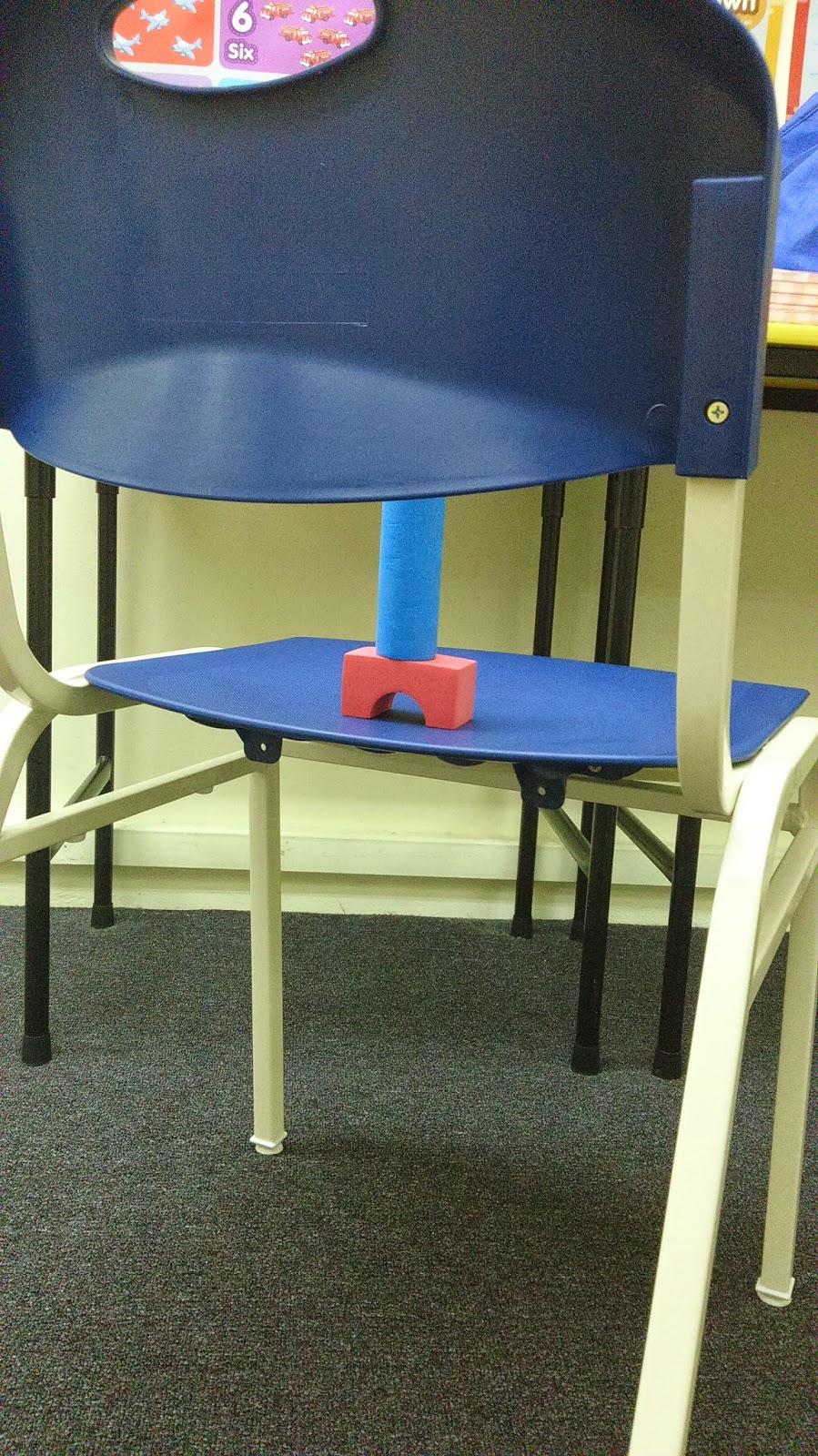

The play they imagined showed how they have had been exposed to knowledge on cake and baking – they could replicate the oven found in the kitchen with a chair! That indicates how their brains and experience can relate objects using their critical and creative thinking skill that eventually leads to what I have always believed in – they learn by playing.

Clean-up Session 

A clean-up session after an activity may be seen as not important but this is when they show their team work – I get to see them cleaning up their toys, moving the toys containers and pass to everyone in the class and then I’ll see everyone moving and walking around the class to put the toys inside the box, until the class is clean. There will be times that they will fight with one another over the “moving boxes” out of making sure that the class is super clean, but what is important to me, they work together.

When the clean-up session is fun, I'm sure they will not have any problem to do it again and again. The activity may take time but as long as they are doing it together, that means that they are doing it okay.

There are so many other things in the world that we could do with them to teach or to impose well, positive values. I would suggest more in my next entry so that you could do with your children at home or even at your own school.

Until next time!


Authored by,
Teacher Aniem
LETZHOP Bandar Baru Bangi

Tuesday, 7 October 2014

Letzhop Sports Day 2014

Apart from a formal learning, physical activities are equally important in children’s development and process of growth. Sports, in specific, contribute not only to the physical well-being, but also for the psychological and social development of children.

In order to promote a healthy lifestyle among our students, Letzhop conducted a Sports Day event on 17 May 2014 at Pusat Komuniti Sri Petaling. The event, joined by our Bandar Baru Bangi, Selayang and Shah Alam centres, was quite a successful event.

 
At the beginning of the event, there was a School Marching competition between all participated centres. Letzhop Shah Alam won the best school marching contingent award, followed by Letzhop Bandar Baru Bangi and Letzhop Selayang, at the second and third place, respectively. All centres were very much participative in giving their best performance.


Letzhop Sports Day is unique because we added a carnival atmosphere to the event. All students need to complete five (5) challenges in order to collect prizes at the final checkpoint counter. The games and activities are carefully selected from fairground favourites. Each of these fairground games comes complete with a checkpoint card that can be used to collect prizes. So, it is like attending a fun fair!


Congratulations to the students for the enthusiasm and sportsmanship. Sincere thanks for parents for the continued support, and deepest gratitude to all teachers and the whole team members for the dedication and commitment!


Authored by,
Ms. Aishah
LETZHOP HQ

Tuesday, 30 September 2014

Communicating with Our Internet-Gen Kids

One of our children surprised us (my husband and I) with his recent achievement in the mid-term school exam. We felt it was timely to reward him with what he really wanted. Like many kids of this era, he likes computer games. When asked what he really wanted to get with his cash reward, his reply was a premium version of the same game from the internet. He told me the price of the game in US currency and the equivalent of it in Ringgit. He convinced me that there would still be some savings after purchasing the game. The day before we purchased the game, I wanted him to explain to me why he liked the game so much. He did so patiently and happily despite my constant interruption with questions and the need to correct his statements (ahem… playing a dual role of mom and teacher). I could see that he felt frustrated but he did not give up. So I said “Son, you have to explain to me about your game like you are talking to a layman”. He lamented, “Mom, I feel I am talking to a caveman!” When it comes to technology-related matter, my children always think they know more and agree unanimously that I am far behind!

These days, children use a lot of computer terminology in their day-to-day life. I recall one evening I had to dress up for a relative’s wedding dinner. When I walked down the stairs in a long dinner dress with my hair neatly blown and tied, my children looked up at me with a pleasant expression. My youngest said “Wow... mommy, you have upgraded!” I took the statement as a compliment. As I could not decide on the accessories to match my dress, I wore and switched between a few ear studs and sought for opinion. I recollect this reply from one of them “the latest version is awesome” (he meant that the last pair of ear studs was the best).

Quarrelling and fighting among my kids is a common scene in my house. I recall there was an occasion where two of them quarreled over their possession of toys. One was so angry at other sibling for taking away his toy that he screamed that he would delete the latter from his life. Where would you think they learnt the word “delete” from, if not from the use of computer! As my children grow older and start to attend school, I begin to give constant reminders to them about completion of school homework, maintaining self-hygiene and many others. The regular reminders are no longer effective as I realized I said the same thing all the time and received either no or super delayed response. One of them suggested that I get him a phone and let the phone replace my role in giving reminders… and he added that the reminders are “not so boring”! Is he hinting that I am a boring mom or that his life is boring without a device???

Kids of today’s generation capture and retain information super well from the electronic gadget they are exposed to at home (I shall refer this as “family gadget”). On one account, my children were playing a board game with their cousins which require a good amount of English vocabulary in order to win. Not surprisingly, words that they formed on the board included G for Gmail, F for Facebook, Y for Yahoo, I for iPad and S for Samsung. I start to wonder if it is time for our educational materials like school books, learning posters, educational videos to be reviewed to incorporate the information (both pictorial and words) our children pick up from the family gadget.

On the other hand, I have to get out from the cave… and start to use more computer terminology in my daily chat with children of this era (surely my children to begin with) so that they find me more interesting to talk with. And I certainly do not want my role being replaced by the family gadget.


Authored by,
Ms. Lim Pheak Buen
Principal, LETZHOP Klang

Tuesday, 23 September 2014

Don't "Handicap" Your Child


IS YOUR CHILD TOO SPOILED? “Who else we want to pamper if not our own child?” I have to agree to that statement – definitely! However, the main purpose of raising a child is to ensure that he or she will be a functional human being and most importantly is that to be independent – especially when the parents, care-takers, siblings or even teachers are not around. 

This is crucial as based on my experience as a teacher, I could tell a child is being pampered by his or her parents too much that the student can’t get to be independent in class during a lesson. The possibility of such consequence may result from lack of positive reinforcement activities at home. For example, if a task as simple as making the bed after waking up every morning is not fostered, the child may not develop a habit that incorporates cooperativeness or being independent. The habitual activities are to be trained at a very young age by their parents. Other task that helps to foster positive behaviour in a child is cleaning up their toys when they are finished – one of the things that will definitely facilitate the child’s positive growth at school among other children. 

The lack of discipline may seem to be petty but what I wish to highlight in this entry is that, teachers may find it a challenge to convey a simple instructions or have clear communication with the students with lack of exposure to cooperative task or being independent at home. This will then hinder the learning in class. 

One way that I see on how we could minimize the hindrance in class is to foster among the students as early as possible on encouraging them to assist the teacher to clean up after activities in class – as simple as helping to put the books back on the rack or pick up a small paper rubbish on the floor into the dustbin won’t do any harm. Soon, the child will see the routine or habitual activity as a norm and practice it at home – assisting their parents with bigger chores. Children with such motivation will learn to love his or her school environment that allows children to be diligent and cooperative which eventually lead to positive communication among each other. 

Authored by, 
Teacher Dila 
Teacher, LETZHOP Selayang


Reference:


  1. Picture Credit to http://childrensmd.org/browse-by-age-group/child-behavior-problems-3-steps-getting-help/


Tuesday, 16 September 2014

Nature-loving generation

Children and nature goes together like peanut butter and jelly, don’t they? I am one of those who love both!

Getting in contact with nature may be a source of wonder and inspiration for all, especially children. It is also rather essential to the children’s development of health and sense of spirituality. At Letzhop, we encourage them to love and appreciate the Mother Nature and one of the ways to get them to do that is by bringing them closer to nature. Letzhop has organized a field trip to the Farm in The City, Seri Kembangan on 11 September 2014.


Our one day trip gave our children the opportunity to touch and experience the various species of animals and plants. They were given the chance to feed and pet the animals available at the farm. They got pretty excited especially when they got to touch big and small animals like a deer, a rabbit and the guinea pigs.


Back from the trip, the children shared a lot of insightful info that they gathered from the farm. You may probably think that they were all fun and play with the animals but what I did not realize was that when our children mentioned about, how an Ostrich egg can hold up a man weighing up to 250 lbs without breaking the egg!


The field trip to the Farm in the City is not only allowing our children to just learn about the animals but to also appreciate the nature more. We hope to produce more children who will love the nature and eventually appreciate all this while they still can.

Authored by
Teacher Kartika and Teacher Hajar
Teachers, LETZHOP Shah Alam

Tuesday, 9 September 2014

The Significance of Play

If you go into a preschool and you don’t see any block play, art activities or any games being played at all, you need to seriously question whether it is the right preschool for your child. This is due to a theory and what parents often hear of the importance of play among children as they are learning – playing with blocks or interactive games are suitable to be collaborated with the academic transmission between the teacher and child, and also among other children at school. Let’s see how play can be very significant to learning.

A preschool program that acknowledges the importance of play is going to be able to offer your child the best opportunities to learn. Although it might seem as a tiny element in a child’s whole academic progress it may also be a basic foundation towards an excellent success.


There are many benefits of games and play to a children development such as vocabulary expansion. For example, when playing with other children or adults, vocabulary and language skills are nurtured. Your child will listen and learn the language he or she hears without even realizing. A simple activity like playing with cars, trucks and trains as well as animals increases new vocabulary as children learn the names of each, what they do, what they eat or where you can find them.

In addition, blocks are helpful play tools in Mathematics and problem solving activities. I have been observing my students playing blocks for months and surprisingly, they are able to imagine and create different things with the same blocks each day. Either it’s a tower, camera or even an imaginative cheese cake; it shows that their creativity is expanding day by day. The creativity that they develop eventually leads to greater success in learning – it goes back to tackling the basic concepts in mathematics that could be related to the exposure of various shapes and sizes observed, as well as skills in problem solving.

Adding more to the pros, play also helps in gross and fine motor skills developments. In an article, Play in Preschool: Why it Matters by Geiser, she explained that the process of motor skills developments involve the large muscles of the legs and arms while fine motor development is building the muscles of the hands that will be used for writing (2013). Play can provide many opportunities to work on strengthening these muscles without your child even being aware of it! Based on my own experience handling younger kids at Letzhop, I believe play can cure problems like disabilities in writing neatly or even holding a pencil properly.


Besides that, at Letzhop we use interactive games as one of the play activities that can help to enhance students learning. Based on the previous article by Teacher Adeb, we were clearly informed that the content and games in the Sesame Street English lessons were specifically designed for preschoolers’ and are marketed as educational materials to optimize a child’s development. Therefore, the games in every lesson vary from puzzle, mix and match, to songs and many more.

In a nutshell, an effective academic program or learning centre should cultivate the elements of play and games to ensure that the students get a fun opportunity to learn and at the same time expand their imagination that helps to a brighter academic development. As a teacher at Letzhop, I am proud to be a part of a learning centre that provides play activities every single day with our beloved students. Last but not least, play and games are not useless activities that waste time, but it is the basic foundation to produce a champion! 


Authored by,  
Teacher Zeeda 
LETZHOP Bukit Jalil  


References:
  1. Geiser, T. (2013). Play in School: Why it Matters. Retrieved September 10, 2014, from http://www.education.com/magazine/article/play-preschool-matters/
  2. Mutalib, A. (2014). TV: Bad or Good for Kids? Retrieved September 10, 2014, from Letzhop Blogspot: http://www.letzhop.blogspot.com/2014/08/tv-good-or-bad-for-kids.html

Tuesday, 2 September 2014

Introduction to Letzhop Sesame Street English Damansara

Letzhop Damansara Building

Letzhop Sesame Street English Damansara is situated at the famous Damansara Uptown business centre and is accessible via LDP, Sprint highway or NKVE. It is a corner lot and is located right above the Papparich Kopitiam and the Bald Bear Guitars. Other prominent landmarks include the Deloitte office building, Tadika Chim and Masjid Mujahideen Damansara Utama. You can also find us in Google Maps here.

Letzhop Damansara K1 Class

The centre has 3 well-equipped, fully air-conditioned and colourful classrooms, with touch screen TV panels, flash cards, storybooks and other teaching tools to adapt to the visual, auditory and kinaesthetic learners.
 
Letzhop’s Cheerful Teachers

Our teachers come from a variety of backgrounds. Miss Nurul has a Bachelor’s Degree in Teaching English as a Second Language (TESL), Miss Hani is wrapping up her studies in Psychology and will soon be awarded her degree in November, and Madam Sarini, who is the Principal, has a background in Child Psychology and Learning Disorders Management, as well as a Bachelor’s Degree in Computer Science.

We hope that you can come visit us soon together with your children. Trial classes are available! Hop on and grab this opportunity to quality education at a great value!

See you there!

Authored by,
Teacher Sarini
LETZHOP Damansara